Loving as limited people
Nb: As a special treat and for those following along, here’s part 2 recorded by yours truly:
In Part 1, we explored snapshots as a way of thinking about regret: a way of looking back at moments without turning them into permanent verdicts.
But relationships are not snapshots. They are living, moving, complicated things. They cannot be reduced to one conversation, one season, one failure, or one point in time.
What snapshots can do, though, is lead us toward another kind of honesty: the recognition that every relationship is lived inside limits.
If snapshots help us resist turning moments into verdicts, then limits help us resist turning love into an impossible ideal.
We’re now asking something slightly different:
What does it mean to love as limited people?
Because much of what we come to know about ourselves doesn’t happen in isolation. It happens in the ordinary, ongoing work of living alongside other people — in families, friendships, partnerships, communities — where who we are is not just expressed, but stretched.
We carry quiet expectations of ourselves into these spaces. That we will be patient. That we will be generous. That we will love consistently, and well.
We carry expectations of others, too. That they will understand us. That they will be available when we need them. That they will grow with us, forgive us, notice us, or respond in the ways we hoped they would.
And we carry expectations of the relationships themselves. That certain relationships will feel easy. That shared history will guarantee closeness. That people we once knew deeply will continue to fit into our lives in the same way. That love, if it is real, will somehow keep exceeding the difficulty.
And this is not only true in one kind of relationship. It can surface in friendships, in family life, in parenting, in communities, and in the long commitments we make to one another
Marriage can bring this into sharp relief. We often speak about marriage through the language of commitment, sacrifice, and covenant — and there is beauty in that. It resists the idea that love is only worthwhile while it is easy, convenient, or personally fulfilling. But even covenantal love is lived by limited people. Over years, couples may find themselves facing costs they did not know they would be asked to carry, or asking themselves questions they did not expect to consider: “What is this asking of me? What have I given? What can I still give?” These are not necessarily signs that love has failed. They may be signs that love is being lived in the real conditions of two human lives — with limits, histories, hopes, wounds, and capacities that cannot simply be wished away.
And once we start to see this, the point is not to single out marriage, parenting, or friendship as uniquely difficult. It is to notice the broader pattern: love is always lived by actual people, not imagined ones.
Eventually, in one form or another, the imagined version of a relationship meets the real one. Not always dramatically. Often gradually. A season asks more than we expected. Children are more complex, more demanding, more themselves, or even more of ourselves than we imagined. Friendships don’t hold in the way we thought they would. Family dynamics remain tender, complicated, or unresolved. Relationships require a kind of emotional work we did not anticipate.
What becomes visible in those moments is not necessarily failure, but limit: the limit of patience, energy, emotional capacity, and what we can give, carry, understand, or repair at any one time.
I was reminded of this in a conversation with a friend, who described a long stretch of time with her child that had been deeply challenging — not in a single moment, but over weeks and months. It was the kind of strain that changes the atmosphere of a home, the kind that can leave you grieving even while love remains.
When she tried to put words around it, she said:
“It was cathartic but also very distressing at the time. It’s like a grief. A sense of loss, like losing a type of innocence and naivety, this confronting sense of, oh, my love is not complete and perfect and pure. There is a limit to a mother’s love. Because there is a limit to the mother. I’m just a mother, you know.”
Later, she clarified that she didn’t mean this as a criticism of her love, but as “a moment of realising how human and messy and ugly at times it is to love a human as a human. So finite. So conditional.” The weight of it, she said, came from the expectation that mothers should love “perfectly and wholeheartedly and unconditionally,” even when they find themselves wanting to throw their hands up and quit.
And then she said the line I have kept returning to:
“I think it is a both and. It was both distressing and freeing to come to my limit.”
That sentence holds the centre of this piece for me, because there is something distressing about discovering our limits in love. It unsettles the story many of us have absorbed: that good love should be endless, effortless, unconditional in every possible sense. That if we love someone enough, we will always have more patience, more tenderness, more energy, more capacity. But lived love does not sit outside of us. It moves through bodies that grow tired, minds that reach capacity, histories that shape our reactions, and contexts that constrain what is possible. Love, as we live it, is always human-sized.
And maybe that is the part we find so hard to accept: not that we do not love, but that our love has to pass through the limits of who we are. Yet acknowledging that our love has limits can also bring an unexpected freedom. It’s ok that you’re feeling the strain of it. You have a limit.
This is where the language of limits becomes more helpful than the language of ideals. If snapshots help us resist turning moments into verdicts, limits help us resist turning love into an impossible standard. We do not love from some untouched place beyond our bodies, histories, exhaustion, fears, or capacities. We love through them. And that means there will be times when the reality of what we can give does not match the image of what we thought love would look like.
This matters because it changes how we understand difficult moments in relationships. It asks us not to make too much of one hard conversation, one strained season, one moment of distance or overwhelm. It asks us to resist turning human limitation into a final statement about the relationship, the other person, or ourselves. A difficult moment may reveal something true, but it does not reveal everything of who we are.
Limits help us hold that distinction.
They allow us to say:
This is hard.
This is real.
This is stretching us.
Without immediately deciding:
This is failure.
This is who they are.
This is who I am.
This is all this relationship can ever be.
That distinction matters, because so much suffering in relationships comes not only from the difficulty itself, but from the meaning we attach to it. We thought we would be more patient. We thought they would understand us better. We thought shared history would make things simpler. We thought love would feel less like work. And when reality fails to match the expectation, disappointment rushes in to interpret the gap.
Limits offer another interpretation. Not a softer one, necessarily, but a more truthful one. They remind us that relationships are not lived by ideal selves. They are lived by tired selves, hopeful selves, wounded selves, growing selves — selves still learning how to love and be loved.
This does not make every relationship safe, healthy, or sustainable, and it is important to say that clearly. Recognising limits is not the same as accepting harm, and understanding the conditions of love does not mean enduring what is unsafe or destructive. Some relationships require distance, boundaries, or an ending altogether. But even then, the language of limits can help us see more clearly. It can help us understand what was possible, what was not, what we were carrying, what we could no longer carry, and what compassion might look like without pretending everything was fine.
Compassion is not the same as permission. It does not mean anything goes, or erase responsibility, or ask us to minimise pain. But it does interrupt the instinct to turn limitation into condemnation. Recognising limits can help us distinguish between love that asks something of us and love that begins to consume us.
And perhaps this is the freeing part: not freedom from difficulty, not freedom from responsibility, but freedom from the impossible demand to love as though we were not human.
Limits do not mean love has failed. Limits mean love is embodied. Real love moves through bodies that grow tired, through nervous systems that reach capacity, through people shaped by history, circumstance, and support — or the lack of it.
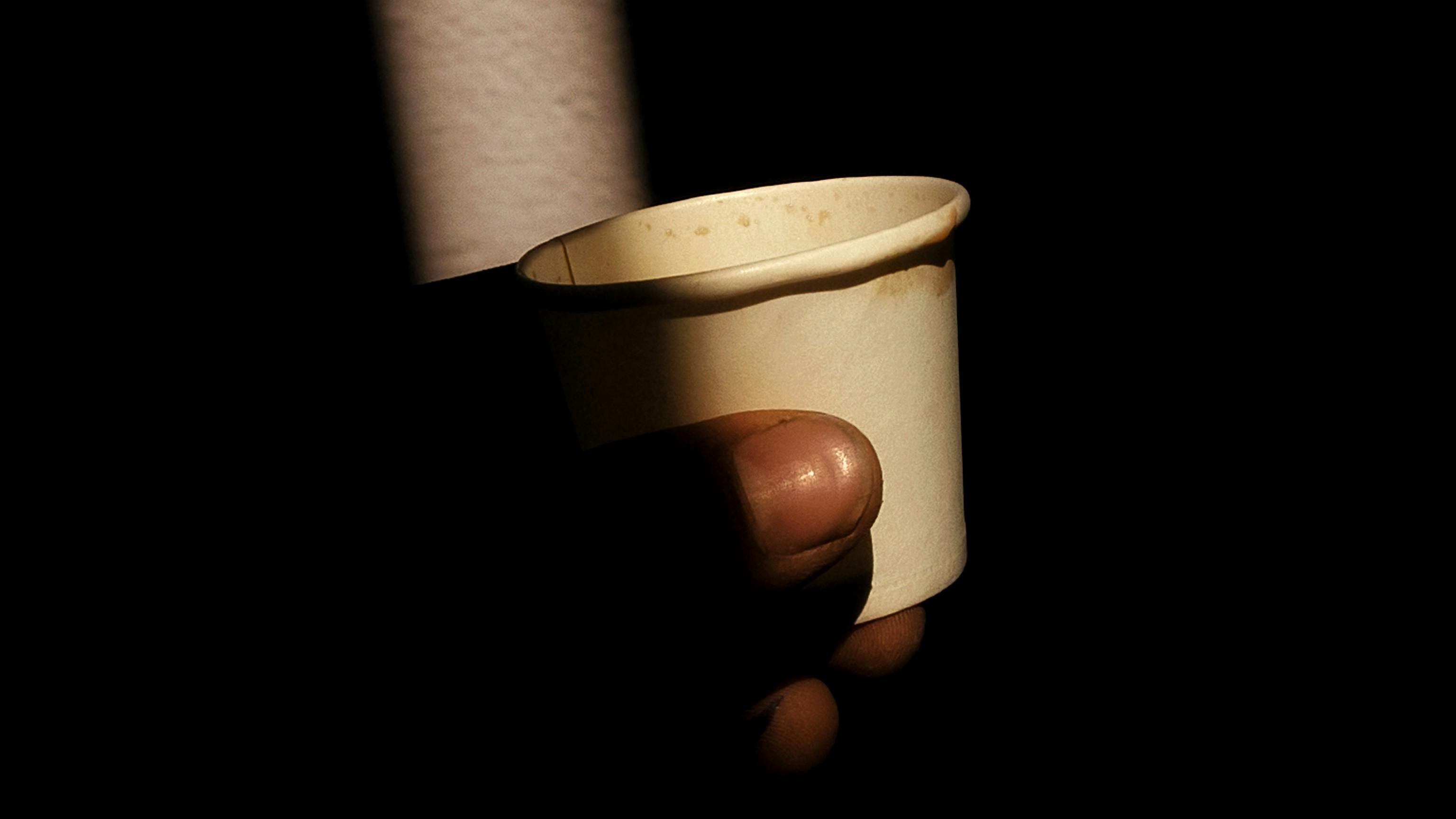
There’s a line from a song I return to often: to all creation I can see a limit. And maybe that is the comfort — not that we should be limitless, but that we were never asked to be.
To love faithfully is not to love infinitely. It is to love honestly, within the contours of who we are.
The grief so many of us feel in relationships isn’t simply that we hit our limits, but maybe that we were taught those limits meant something was wrong with us.
What if the truth is gentler than that?
What if love doesn’t shrink when it meets its edge — what if it simply becomes real?
Maybe this is where compassion begins: not in pretending that love has no limits, but in learning to tell the truth about them without contempt.
In Part 3, we’ll turn towards a practice that helps us hold this complexity more carefully: reflexivity — the work of looking again with clarity, context, and mercy.
Stay tuned!

